the mirror paradox: seeing without knowing

every mirror is a silent witness, it doesn’t lie, but it doesn’t tell the truth either. it reflects, distorts, remembers. it shows us not who we are, but who we fear, who we love, who we pretend to be.
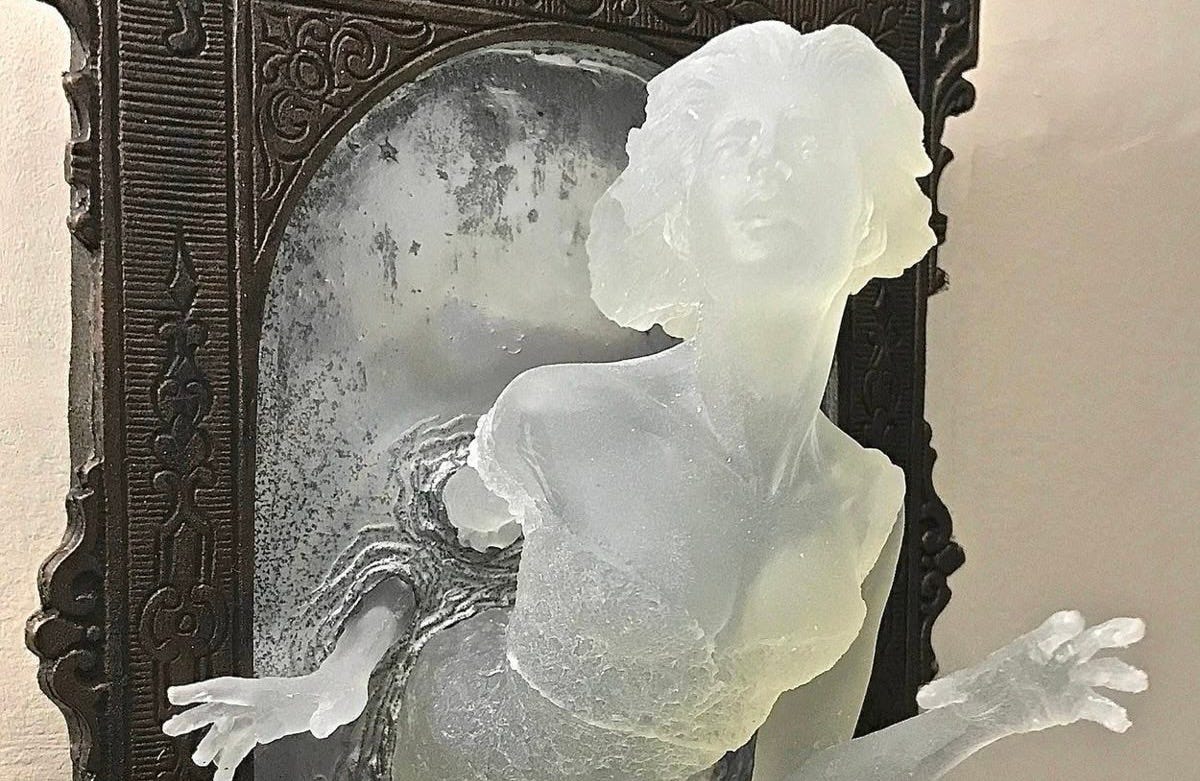
mirrors have followed humanity since the beginning. in pools of still water, in polished obsidian, in the silver-backed glass that now lines our walls. they’ve always been more than objects; they are portals to selfhood, to illusion, to madness. when we look into a mirror, we are not only seeking our reflection, we are searching for confirmation of existence, a momentary proof that we are here. yet the longer we look, the more the image begins to shift. psychology calls it self-recognition, but perhaps it’s closer to self-confrontation. a mirror can comfort, but it can also haunt because in it, the boundaries between the physical and the psychological dissolve.
the anatomy of a mirror is absolutely fascinating. it is formed by a basic structure, but creates so many perspectives on self. the first layer is called “substrate”, also called as “base layer”. it is the material that supports the reflective surface. almost like a hand supporting our reflection to look at as and stare for hours. then there is the “reflective coating”, the layer that actually reflects the light, the essence of the mirror. and lastly the “protective layer”, also called “backing”, that protects the reflective layer. three basic layers and so many selves to explore.
mirrors are often linked to identity and self-awareness, and has many psychological responses differing from person to person.
the first response that i want you to mention is “mirror self-recognition”, it’s all about recognizing yourself in a mirror and seeing all that you have inside of you, indicating self-awareness. it’s when you’re truly exploring yourself by looking at the mirror and seeing every self that you have inside of you.
another response is about body image and self-esteem. mirrors influence how we perceive our own bodies highly. it may cause excessive mirror checking which can be associated with body dysmorphic tendencies or social anxiety. it can be an obsession with the way you look, the way you view yourself, and the way people view you. obsession on how you are perceived, even by yourself.
then there is the “ideal self” vs. “real self”. mirrors force us to confront, the gap between how we see ourselves and how we wish to be. who we want to be and who we really are deep down. maybe the actions that we act through without even realizing, it’s not us, we are acting like who we want to be without realizing we are so different deep down. this can be motivating for self improvement, bit also a source of distress that we can’t escape from every single time we look into the mirror. into the eyes of ourselves feeling like we’re looking through eyes that we don’t even know, or know too much, but definitely not us.
mirrors are very relevant to the uncanny. they often evoke uncanny feelings. sigmund freud, wrote about the uncanny and how reflections can provoke it.
one of those are doubles and doppelgängers. seeing your reflection can feel like encountering another self. in literature and horror, mirrors are used to explore duality, hidden desires, or darker sides of the psyche. when you look through the mirror, you may have a feeling that there is more of you. not only one body, not only one soul. more. more that your mind can even process. seeing another self or a different form of yourself every time looking through the mirror is so common and believed.
then we have mirror anxiety. mirrors can evoke anxiety because they reflect both self and the passage of time, aging, or morality. every time you look into the mirror you are someone older, someone who spent more time hear, someone who is closer to death. when you are scared of evolving, changing, growing, or aging, mirrors can be a big reason of anxiety that you can’t escape of.
and yes, the one that you’re probably waiting for, there are paranormal associations. folklore often links mirrors to spirits, portals, or trapped souls, reflecting a deep-seated human discomfort with seeing “another self” that is potentially dangerous. i once met an old woman who kept all of the mirrors with some kind of fabric on them, trying to keep spirits, portals, and trapped souls away from the house. she was so obsessed with mirrors she couldn’t stop staring at them but every time it was nighttime, she would but that piece of fabric on the mirrors and keep them away.
when babies first see themselves on the mirror it’s their first experience seeing their reflection, they perceive a cohesive self for the first time, even if their body awareness is fragmented. mirrors can symbolize the construction of identity: the image is whole. but the internal self feels incomplete, creating tension between perception and reality. this gives psychologists the chance to use mirrors in therapy, especially in psychodrama. this increases self-awareness and emotional processing which helps patients confront aspects of the self they avoid or suppress. mirrors can trigger emotional resonance, often unconsciously. seeing oneself in a mirror can activate memories tied to self-image, such as shame, pride, or nostalgia. in melancholic or depressive states, mirror may amplify feelings of self-doubt or unworthiness, but they can also be used intentionally in therapy to acknowledge and integrate emotions.
mirrors appear frequently in literature and art as symbols of the mind by being used for self exploration: confronting fears, desires, or truths. mirrors can create a new perception, reflecting our biases or insecurities. also can represent the conscious vs. unconscious, inner vs. outer self. it can be many doubles because with a mirror you now have a double and you can see your different selves, even a paradox, by the help of a mirror.
mirrors are strange companions: silent, but always watching. sometimes they reflect what we are ready to see, and sometimes they reveal what we’ve hidden too long. perhaps that’s why they frighten us; they remember versions of us we’ve forgotten. in every glance, a thousand selves flicker beneath the surface: the child, the lover, the stranger, the ghost.
to live is to carry those reflections inside of us, not as distortions, but as proof that we are constantly becoming. every time we look, we meet another self in the process of forming. in that sense, mirrors are not just surfaces but symbols of evolution. they show us that change, though unsettling, is the only real form of truth.
in art, mirrors are tools of revelation. in psychology, they are instruments of self-discovery. in myth, they are portals. but in the quiet hours, when it’s just us and the reflection that refuses to blink, the mirror becomes a witness to the most human thing of all: the ache of trying to understand ourselves.
maybe that’s why, even when it frightens us, we return. maybe the act of looking is its own kind of healing, a ritual of acknowledgment. and perhaps, when the reflection finally blurs into something unrecognizable, that’s when we are closest to seeing ourselves clearly.
beautiful article
Nice